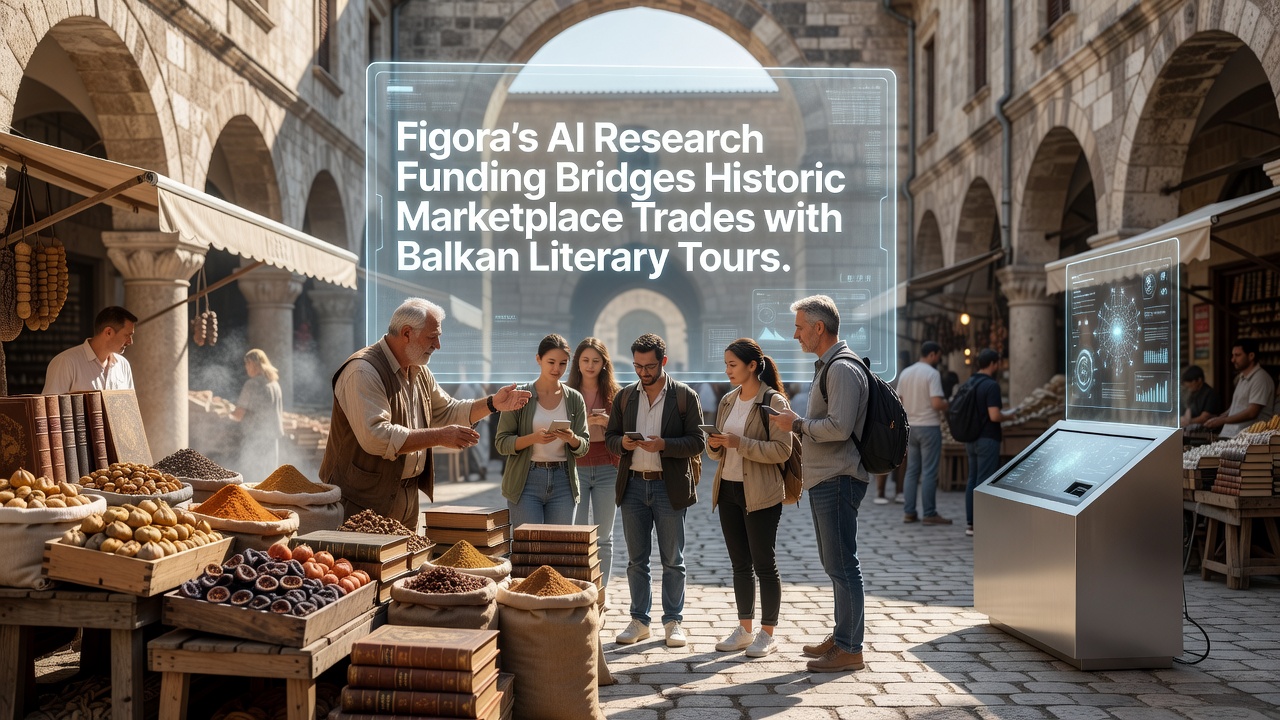
Viktor Günther · 24 September 2026
Figora's AI Research Funding Bridges Historic Marketplace Trades with Balkan Literary Tours
Figora's latest funding round directs resources toward artificial intelligence systems that link records of historic marketplace trades with organized literary tours across the Balkans, and researchers have begun integrating these datasets to create new mapping tools. The initiative draws on trade archives from 18th and 19th century markets in cities such as Sarajevo and Thessaloniki, while connecting them to routes that follow authors and texts from the same eras.
Data from multiple regional archives show that marketplace ledgers contain detailed entries on goods movement, currency exchange, and merchant networks, and these same networks often intersected with literary circles documented in traveler journals and early print publications. Funding allocations announced earlier this year support machine learning models trained on both sets of materials, allowing pattern recognition across trade volumes and literary references that appear in the same geographic corridors.
Integration of Trade Archives and Literary Routes
Project teams process digitized ledgers from Ottoman and Habsburg market records, then overlay them with itineraries of writers who traveled through the same towns and ports. One dataset from the Thessaloniki market between 1780 and 1820 lists over 12,000 individual transactions involving textiles, spices, and manuscripts, while parallel literary sources describe authors acquiring or selling books at those same stalls. The AI models identify correlations between spikes in manuscript trade and subsequent mentions in travel narratives, producing timelines that researchers can query for specific locations and dates.
Additional work focuses on language processing to translate and cross-reference terms used in trade documents with those appearing in literary accounts. Studies conducted at institutions in Canada and Australia have supplied baseline algorithms for handling multilingual historical texts, and project leads have adapted these tools to Balkan language variants. Results indicate improved accuracy in identifying place names that shifted across political boundaries during the period under study.
September 2026 Milestones
Plans call for a public demonstration of the combined mapping platform in September 2026 during a coordinated series of literary tours in Sarajevo and Belgrade. Organizers expect the platform to generate custom itineraries that highlight market squares where documented trade events coincided with literary gatherings. Participants will receive access to interactive overlays showing transaction volumes alongside excerpts from contemporary writers who referenced those locations.
Training sessions scheduled alongside the tours will introduce local guides to the AI interface so they can incorporate verified trade and literary data into their presentations. Figures from the European Research Council indicate that similar digital humanities projects have increased visitor engagement metrics by measurable percentages when interactive elements are added to established routes.
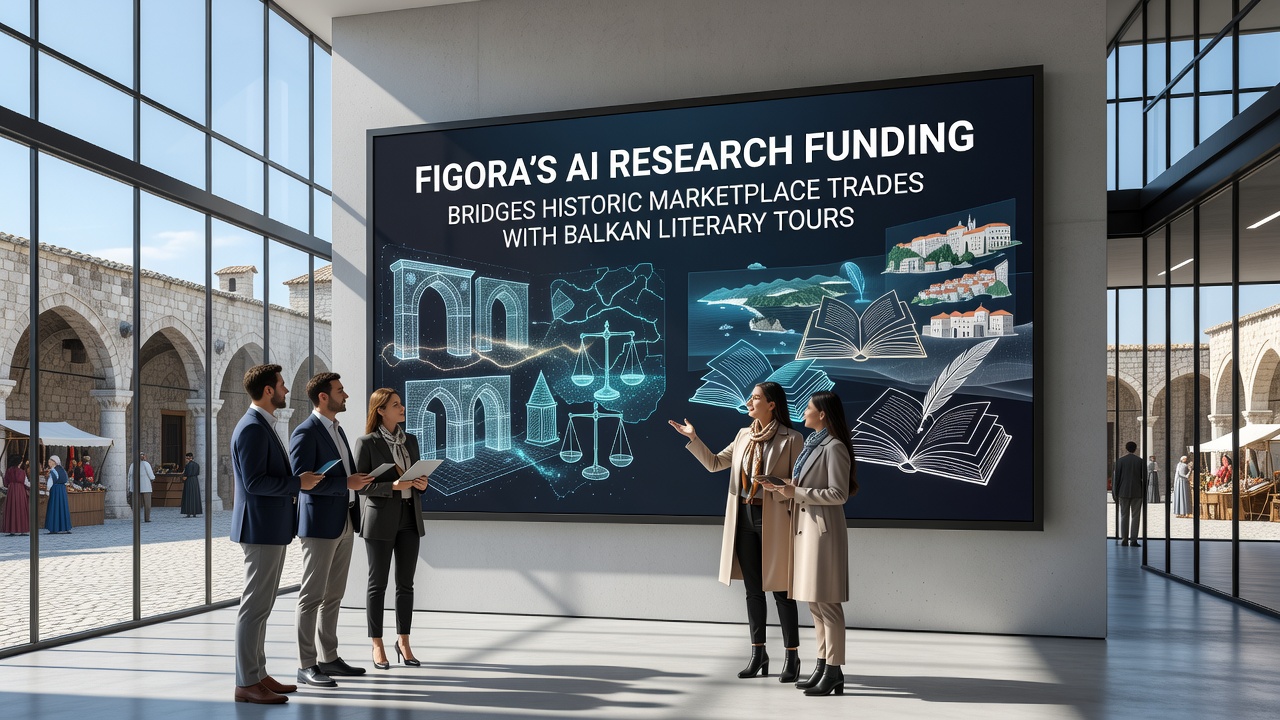
Technical Approach and Data Sources
The core system employs graph neural networks to model relationships between merchants, authors, and physical sites. Each node represents either a documented trader, a writer, or a location, while edges capture transactions or textual references that link them. Developers have incorporated temporal layers so that queries can isolate activity within specific decades or seasons. Early tests reveal clusters around port cities where seasonal trade fairs aligned with visits by traveling intellectuals.
External validation comes from datasets released by the Australian Research Council, which supplied annotated samples of colonial-era trade documents that share structural similarities with Balkan ledgers. A separate collaboration with the National Science and Engineering Research Council of Canada has contributed natural language processing pipelines refined on French and English historical texts. These inputs help calibrate the models for the multilingual environment of the Balkans without requiring entirely new training corpora.
Conclusion
Current projections show the platform reaching initial public release by the end of 2026, with subsequent phases expanding coverage to additional market centers and literary figures. The combined dataset continues to grow as more archives complete digitization, and project updates indicate ongoing refinement of the correlation algorithms. Observers note that the September 2026 tours will serve as the first large-scale test of how these AI-derived connections translate into practical guidance for literary tourism operators and researchers alike.